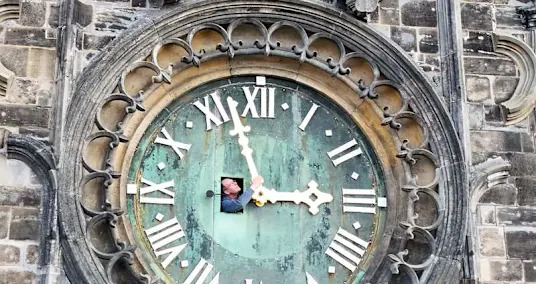
Clocks across the majority of European countries are set to go forward by one hour early on Sunday as the continent moves to daylight saving time, also known as summer time.
Clocks in most European nations including Germany advance by one hour at 2 am (0100 GMT) to 3 am, heralding longer evenings and brighter days.
This means that for the coming months parts of Europe will be on Central European Summer Time (CEST), before moving back to Central European Time (CET) in the autumn, when clocks go back again by an hour on October 25.
The aim of the change is to make better use of daylight in the shorter days of the winter in the northern hemisphere.
The signal for the automatic changeover of the clocks in Germany comes from the Federal Institute of Physics and Metrology (PTB) in the northern city of Braunschweig, also known as Brunswick in English.
The institute's experts ensure that radio-controlled clocks, station clocks and many industrial clocks are supplied with the signal via a long-wave transmitter called DCF77 in Mainflingen near Frankfurt.
latest_posts
- 1
 People can't get enough of this couple's Hallmark movie reviews. They don't know the painful backstory.
 - 2The Most Famous Virtual Entertainment Powerhouses of the Year
- 3Mystery foot suggests a second early human relative lived alongside Lucy
- 4No respite for German economy as experts slash forecast over Iran war
- 5Verdicts against social media companies carry consequences. But questions linger




- Vote in favor of Your #1 Home Exercise Gear: Execution and Comfort Matter
- Family-Accommodating Snow Sports Experiences
- Step by step instructions to Pick A Pre-owned vehicle Stage
- The Best Computer games for Multiplayer Fun
- Regeneron's experimental therapy combo effective in untreated cancer patients
- 'Home Alone' actor Joe Pesci said 'no' to this stunt until he saw a 9-year-old girl do it, says director Chris Columbus
- Police arrest 18 as anti-war protests spread across Tel Aviv, Haifa, Jerusalem
- Style Narratives: A Survey of \Patterns and Styles Assessed\ Design
- Satellites capture aftermath of Ethiopian volcano's 1st eruption in recorded history (images)