When you buy through links on our articles, Future and its syndication partners may earn a commission.

No fooling: Today is a huge day for NASA, human spaceflight and space fans around the world.
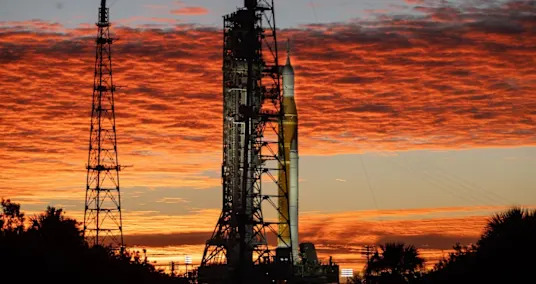
NASA plans to launch its Artemis 2 moon mission from Kennedy Space Center (KSC) in Florida today (April 1) at 6:24 p.m. EDT (2224 GMT). You can watch the liftoff live here at Space.com, beginning at 12:50 p.m. EDT (1650 GMT), and get updates via our Artemis 2 liveblog.
And you really should tune in, for Artemis 2 will do something the world hasn't seen in more than half a century.

Artemis 2 will use a Space Launch System (SLS) rocket to send four astronauts — NASA's Reid Wiseman, Victor Glover and Christina Koch, and Canada's Jeremy Hansen — on a 10-day trip around the moon and back to Earth in an Orion capsule.
No humans have ventured to lunar realms — or even beyond low Earth orbit (LEO) — since NASA's Apollo 17 moon-landing mission in December 1972.
All of the Apollo astronauts were also white American men, so Artemis 2 will make some demographic history as well: Glover, Koch and Hansen will become the first person of color, first woman and first non-American, respectively, ever to travel beyond LEO.

As its name suggests, Artemis 2 will be the second mission in NASA's Artemis program of moon exploration. Artemis 1 sent an uncrewed Orion to lunar orbit and back in late 2022.
Like that previous mission, Artemis 2 is a test flight, designed to show that Orion is capable of supporting astronauts for an extended period in deep space. It will mark the capsule's crew-carrying debut and third spaceflight overall, after Artemis 1 and an uncrewed test mission to Earth orbit in 2014.

NASA will notch yet more milestones on Artemis 3, a 2027 mission to Earth orbit that will test Orion's ability to dock with one or both of the Artemis program's crewed moon landers (SpaceX's Starship and Blue Origin's Blue Moon, both of which are still in development).
And, if all continues going to plan, NASA will land astronauts near the moon's south pole on Artemis 4, which is currently targeted for late 2028. The agency will keep sending crewed and robotic missions back to the area, building up a base and learning how to live and work far from Earth — knowledge that will help the agency make the next giant leap to Mars in the 2030s or 2040s, the thinking goes.
That sustained, increasingly ambitious activity will mark a big difference from the Apollo days. Back then, NASA just wanted to put boots on the moon before the Soviet Union did in order to demonstrate technological superiority over its space race rival. The big push was to put down flags and footprints, not build a base.
So, while today's launch will evoke Apollo for many viewers, it's really about the future — charting a path through deep space that humanity has not yet taken.
latest_posts
- 1
 Scientists solve the mystery of the prehistoric 'Burtele Foot'
 - 2The Best 10 Innovation Advancements of the Year
- 3Novartis to build manufacturing hub in North Carolina, creating 700 jobs
- 4How Trump's marijuana executive order could change medical research landscape
- 5The Best Business visionaries Under 30





- Hezbollah fires over 600 times at Israel, IDF troops over last 24 hours
- Which salad do you believe is a definitive group pleaser? Vote!
- Signature Scents: A Manual for Outstanding Fragrances
- Great DSLR Cameras for Photography Devotees
- Innovative Versatility: Examples of overcoming adversity from Entrepreneurs
- 4 astronauts depart ISS, leaving behind just 3 crewmates to staff the orbiting lab
- Multi-million-euro win in Spanish lottery in doubt due to oversight
- Von der Leyen: Paris meeting sends signal of unity for Ukraine
- The Tradition of Stone: A Gander at Notable Structures Through the Ages