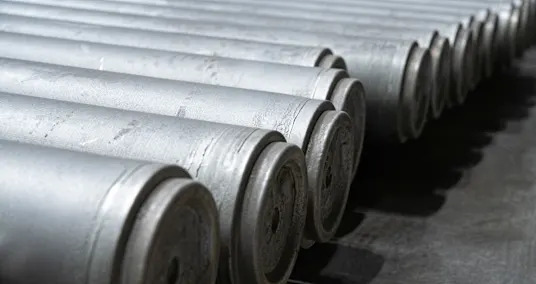
Fears of global aluminium shortages that could affect the production of clean energy technologies intensified after Iran struck two major Gulf aluminium producers, sending prices to a four-year high. The Middle East accounts for 9% of the world’s production of aluminum, which is essential to a wide range of industries from transportation, construction, and packaging, as well as the manufacture of solar panels, electrical transmission systems, wind turbines, and EVs.
Export shipments to the US and Europe had already come to a halt because of the effective closure of the Strait of Hormuz, and Morgan Stanley economists singled out aluminium as carrying a high level of risk across the value chain. Andy Farida, an aluminium analyst at Fastmarkets, told Semafor that high prices would be passed on to end-users, ultimately causing demand destruction. “A prolonged shutdown (with little to no alternative supplies other than Russia and China) could cripple the supply of aluminium to support the production of clean and green technology,” he said, adding that relief could come “if governments allow some sanctioned Russian and Chinese aluminium to be imported.”

latest_posts
- 1
 Vote in favor of your favored spot to peruse
 - 2Investigate Business Mastercard Choices for Better Rewards and Rewards
- 3Smartwatches: Remain Associated and Dynamic
- 4Boeing's troubled capsule won't carry astronauts on next space station flight
- 5Russian drone slams into block of flats in deadly wave of strikes across Kyiv


- IAF intercepts over 90% of drones launched by Iran, Hezbollah during Operation Roaring Lion
- One-third of asylum applications by Iranians approved in Germany
- Creative Style: 10 Architects Reclassifying the Business
- The most effective method to Execute a Lung-Solid Eating routine After a Cellular breakdown in the lungs Finding
- I spent the last year transforming my life. Becoming a Rockette for a day made me confront a fear I couldn't shake.
- Mars orbiter sees 'butterfly' crater spread its wings on the Red Planet
- Man threatens attack on German high-speed train, injures several
- Foot fossil discovery could reshape human evolutionary history
- Dominating the Mastercard Endorsement Cycle: Six Fundamental Stages